
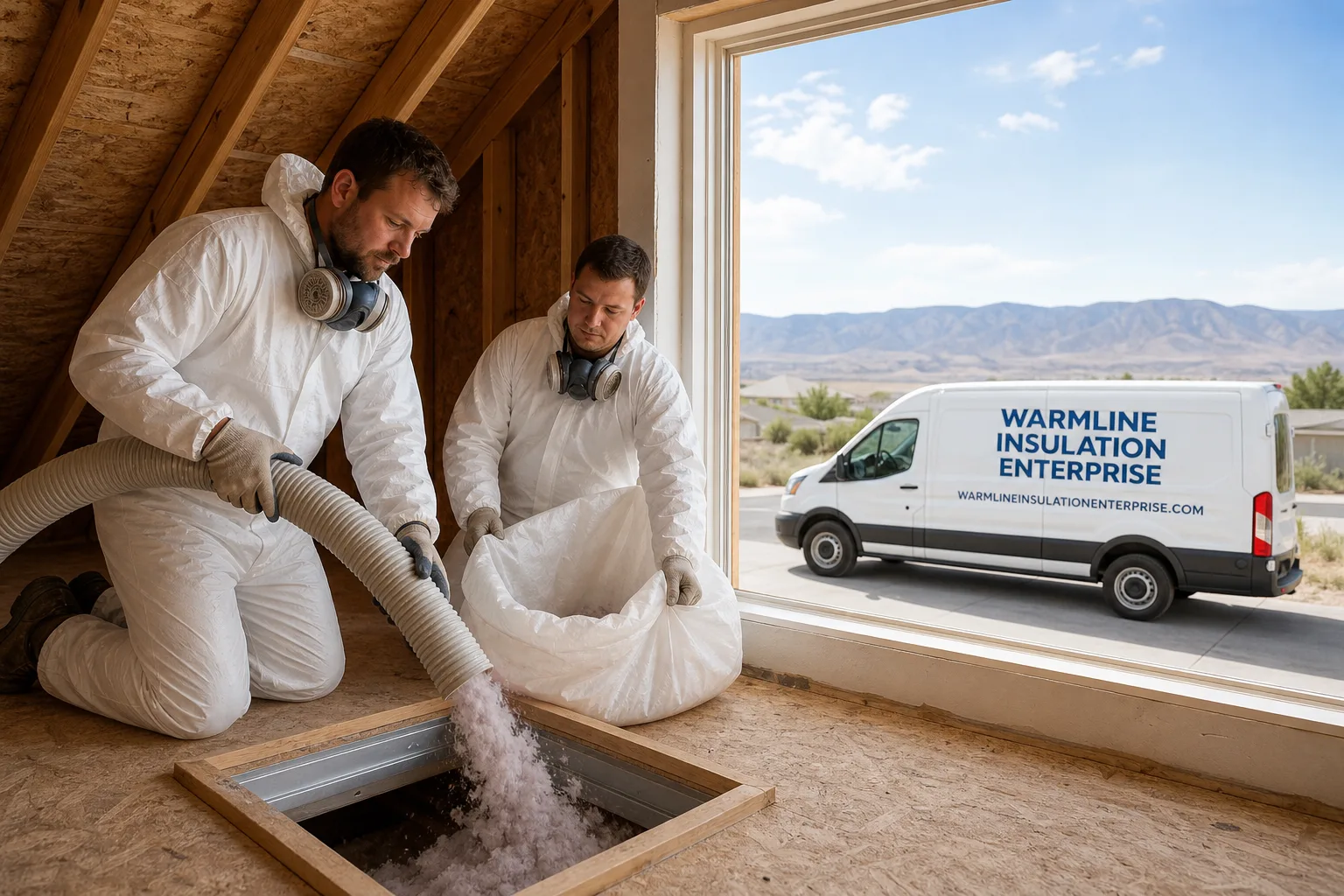
Attic Insulation Removal Cost in Enterprise, NV: What You’ll Actually Pay
Attic insulation removal in Enterprise, NV typically costs $1,200 to $3,800 for an average 1,500 sq ft home, and that range holds only when the job is scoped correctly: vacuum removal, biohazard disposal, sanitizing, rodent exclusion, and new insulation together. Remove the contaminated fiberglass without fixing the rodent entry points and the new material fails within a few summers. We’re Warmline Insulation Enterprise, licensed and insured, and we walk Enterprise attics every week where the old batt is doing more harm than good. Call (844) 972-1736 for a free estimate – a live person answers, day or night.
Key Takeaways
- Removal runs $1.00-$1.50 per sq ft for vacuum extraction alone – most homeowners only get quoted this part.
- Rodent contamination, not age, is why most Enterprise 1990s tract-home attics need full removal instead of a top-up.
- Attics on the south and west sides of Enterprise regularly hit 160°F, and that heat cycles batt insulation until it loses half its loft.
- A removal quote without a remediation plan (sanitize, seal, exclude) is an incomplete job.
- We bundle attic cleaning, rodent proofing, and re-insulation under one contract so you don’t chase three contractors.
Why Enterprise Attics Need Removal More Than Top-Up
Enterprise is a fast-growing unincorporated Las Vegas suburb, and the housing stock tells the story. The 1990s and 2000s stucco-on-frame tract homes that make up so much of it were built with soffit vents and roof penetrations that give rodents an easy path into the attic cavity. Once they’re in, the fiberglass becomes nesting material. The contamination is the reason the insulation has to come out – you can’t seal over a rodent trail and call it remediation.
The heat does the rest. South- and west-facing attics in Enterprise routinely hit 160°F in July. Fiberglass batts exposed to those repeated heat cycles lose loft faster than manufacturer testing assumes. A batt originally rated R-19 at 25 years old is often performing closer to R-10 because it’s collapsed and compressed. Topped-up insulation laid over a collapsed batt just buries the problem. In our experience, when more than 20% of the existing material shows rodent trails, compression below half its original depth, or moisture staining from monsoon intrusion, full removal beats a top-up on a five-year cost basis.
That’s the practical reality most removal quotes skip – the “before” picture. The diagnostic step that documents it in writing is a home energy audit, which we run before recommending removal so you can see exactly which of those three conditions applies in your attic.
What a Removal Quote Should Break Out (Line by Line)
Most competitors hand you one lump sum and leave the homeowner guessing what each dollar buys. Here’s how we itemize, so you can compare apples to apples when you’re collecting bids from a few Enterprise contractors:
| Line item | Typical cost (Enterprise) |
|---|---|
| Vacuum removal of old insulation | $1.00-$1.50 per sq ft |
| Biohazard bagging and disposal (Nevada code requires proper disposal of contaminated material) | $200-$400 |
| Attic sanitizing spray (rodent waste, odor, mold) | $150-$300 |
| Rodent-proofing and exclusion (soffit screening, penetration sealing) | $300-$800 |
| New insulation install (blown-in fiberglass or spray foam) | $1,500-$3,500 |
| Air sealing before re-insulation | $300-$700 |
Two of those lines are the ones we see left off. The biohazard disposal and the sanitizing spray aren’t optional when rodent waste is present – and it usually is, in homes of this era. Those aren’t upcharges for their own sake; they’re the difference between a job that holds and one that smells like the old attic by August.
Why Full Removal Beats a Top-Up – A Simple Decision Rule
Removal is the higher line on the invoice. It’s also the smarter five-year spend in a specific set of cases. Use this test before you commit to either:
- Rodent trails on more than 20% of the surface. If you can see the runs, the trail is contaminated. Top-up over contaminated material just hides it.
- Compression below 50% of original depth. The batt has lost its rated R-value. Adding to it doesn’t restore the missing performance.
- Moisture staining from monsoon intrusion. Wind-driven rain that found a failed roof deck or seal will keep finding it until the seal is fixed. New insulation over a wet cavity will wet out again.
When any two of those are present, the cost of a top-up now plus a full removal in five years is higher than one clean removal today. That’s a straight arithmetic case, not a sales pitch. If none of the three applies in your attic, we’ll tell you a top-up is the better move – the audit findings come to you in writing, so you’re not making the call on a hunch.
How Do You Know When Attic Insulation Needs Full Removal?
Full removal is the right call when the existing insulation is contaminated (rodent waste or trails), compressed below half its original depth, or shows moisture staining from a failed roof seal or monsoon intrusion – any two of those three findings usually justify removal over a top-up. A visual inspection during our energy audit confirms which condition applies, and the finding is documented in writing before we recommend the job. There are other signals to watch for: a persistent musty smell coming through the ceiling on hot days, visible nesting material when you look up into the attic opening, or a July power bill that keeps climbing despite a recent AC service. Call (844) 972-1736 for a free estimate – we’ll do the audit and tell you straight which route is right for your attic.
What Does Attic Rodent Proofing Cost, and Why Bundle It?
Attic rodent proofing and exclusion in Enterprise typically runs $300 to $800 depending on the number of entry points to seal and the extent of the damage. New soffit vent screening, penetration sealing, and gasket replacement at the attic hatch cover are usually the main line items. Bundling it with the removal and sanitizing matters because the sequence is what counts: remove the contaminated material, sanitize the cavity, then seal the entry points. A pest company that treats the rodents but leaves the contamination behind, or an insulation contractor that installs new material without sealing the entry points, leaves you with a botched job. We do all three under one contract, one job, one invoice. That’s what the attic cleaning and rodent proofing service is for.
One detail we see on almost every 1990s Enterprise home: the soffit vents were screened when they were installed, but the screens have long since rusted or torn. Rodent entry slows to a crawl once those are replaced with a proper hardware cloth. That’s the kind of first-hand detail you’ll only get from a contractor who’s actually been up in these attics.
What Do You Get Out of It – the Real Payback
Removal and re-insulation are the diagnostic step that makes every downstream improvement smarter. Once you’ve pulled the contaminated fiberglass and re-sealed the cavity, a clean, correctly-sized insulation package plus an attic & crawl space restoration in Enterprise scope handles the moisture side of the same problem. There’s no point installing new R-49 blown-in (Johns Manville and CertainTeed are what we typically spec) over an attic deck that still leaks monsoon rain. That’s why we scope the belt-and-suspenders job: air seal, remediate, then insulate. Every job is backed by the 90-Day Done Right Promise – if it’s not done right, we make it right. And because we handle this from the audit forward, most jobs are completed in a single visit.
What most homeowners tell us afterward is that the July power bill stopped climbing. That’s the useful metric. The attic is the highest-leverage surface in an Enterprise home because the roof deck takes the worst of the sun – and pulling the old material out is what lets the new material perform to its rated R-value instead of against the old stuff.
FAQs
Attic insulation removal in Enterprise typically runs $1,200 to $3,800 for a full remediation scope on a 1,500 sq ft home. That range covers vacuum extraction, biohazard disposal, sanitizing, rodent exclusion, and new insulation – not just the pull-out. If you’re comparing quotes, ask each contractor to break out those five lines explicitly. Call (844) 972-1736 for an exact figure after our free audit – estimates are free.
Replacement is usually cheaper on a five-year cost basis when the existing insulation is rodent-contaminated, compressed below 50% of original depth, or shows monsoon moisture staining. In those cases a top-up today just delays the full removal. When the material is intact and clean, a top-up will cost less and perform fine – we’ll tell you which applies after the audit. Call (844) 972-1736 to schedule it.
Yes for most standard 1,000 to 2,000 sq ft attics – removal, sanitizing, and re-insulation are usually completed in a single visit. Homes with heavy rodent contamination or a missing vapor barrier may run into a second day for the rodenting and crawl space side of the job. We confirm the schedule during your free estimate. Call (844) 972-1736 – a live person answers 24/7.
Coverage varies. Damage that traces to a sudden event – a monsoon storm that tore a roof vent, a burst pipe that wet the attic – is more likely to be covered than rodent damage, which most policies exclude or treat as maintenance. We provide itemized findings from the audit so you can submit a claim if applicable. Call (844) 972-1736 to schedule the audit.
Ready for a Real Number on Your Attic?
Enterprise homes built in the 1990s and 2000s are hitting the age where a top-up stops working. Get a free, upfront-priced estimate from a licensed and insured contractor who’ll document the findings in writing before recommending removal. Our technicians have up to 15 years of experience and are background-checked and uniformed. Call (844) 972-1736 – a live person answers 24/7 – and we’ll get you scheduled.
Written by the team at Warmline Insulation Enterprise, serving Enterprise, NV.
What Our Customers Say
"Crawl space smelled musty and the floors were cold. Full encapsulation with the thick liner taped at every seam, and a dehumidifier sized for the space. The hygrometer they left reads 48 percent now instead of the 70s."
- Elena Vasquez"Injection foam in the walls of our 1950s house, no drywall demolition, just small holes patched and painted the same day. The street noise in the front bedroom is half what it was."
- Yasmin Farah"They did the energy audit first with a blower door and thermal camera, and showed me exactly where the house was leaking before selling me anything. The fix ended up being air sealing plus a modest attic top-up, not the full replacement another company pushed."
- Grace Nakamura