
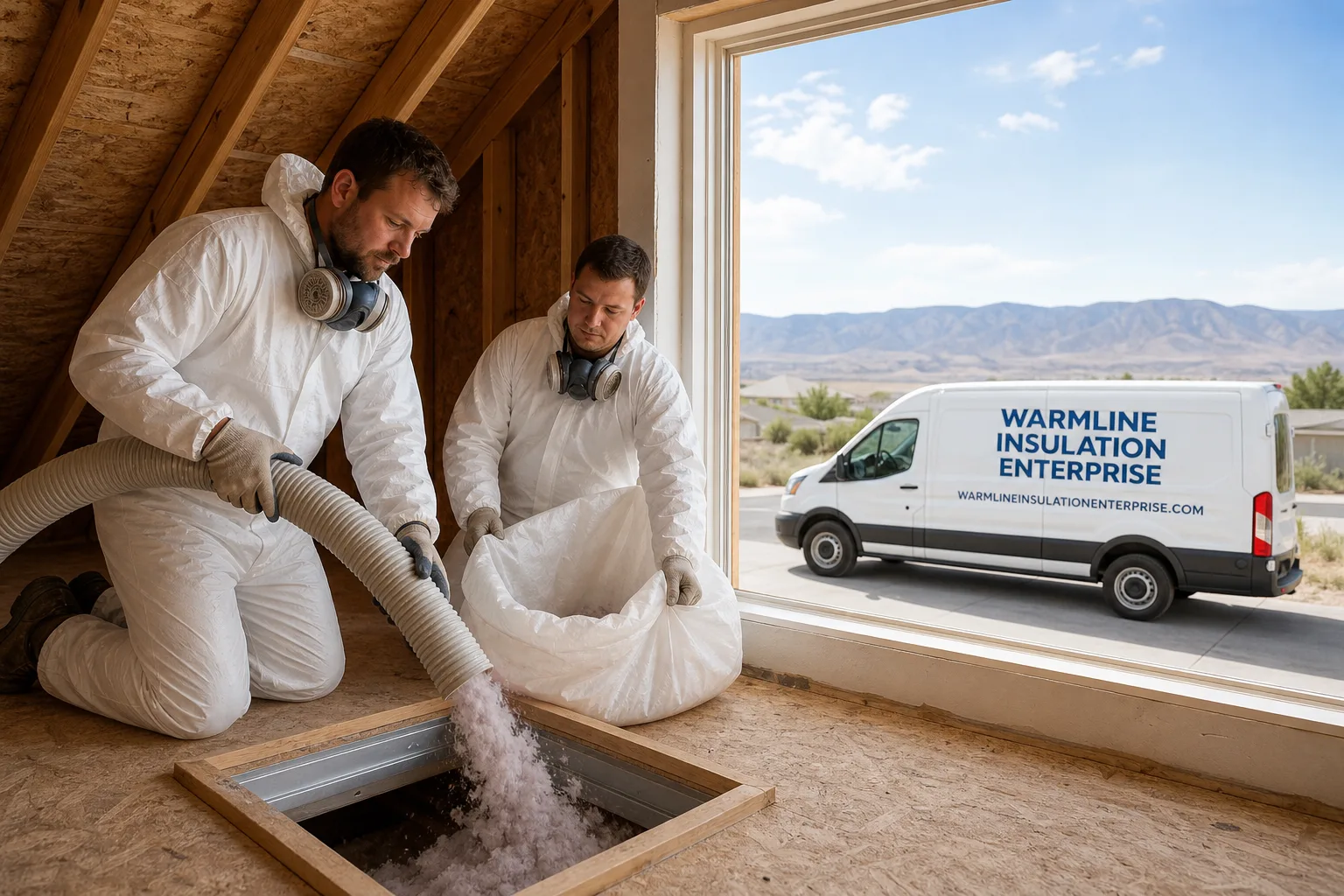
Crawl Space Insulation Cost in Enterprise, NV: What You’ll Actually Pay
Crawl space insulation in Enterprise, NV runs $1.50 to $2.50 per square foot for batts between the floor joists, or $3.50 to $6.00 per square foot for full encapsulation with a vapor barrier and rigid foam at the walls. A typical Enterprise job lands at roughly $3,500 to $5,000 for encapsulation. Call (844) 972-1736 for a free in-home estimate - a live person answers, day or night, and most jobs are finished in a single visit the same week you call.
Before you spend a dollar, though, there’s an Enterprise-specific reason the second option usually wins here.
Why “It’s the Desert” Is the Most Expensive Assumption in Enterprise
Homeowners skip crawl space insulation in the Mojave because the ground looks dry and the air is bone-dry most of the year. Then July and August arrive. Monsoon season pushes moisture into the soil, and an unencapsulated crawl space turns into a slow-moving problem that no attic upgrade can fix.
Here’s what’s happening under the floor. Even on a day that hits 110°F outside, ground temperatures under an Enterprise home stay near 85°F, and the crawl space itself sits cooler than the living area above. That thermal and humidity gradient pulls moisture-laden air upward into your floor system. Fiberglass batts wedged between the joists don’t stop air. They filter it, and once damp, they sag and stop insulating at all.
Wrap a desert crawl space properly and the floor stops buckling, the indoor humidity settles, and the why of it becomes obvious. That’s the whole job.
Two Crawl Space Approaches, Two Very Different Enterprise Prices
Not every quote you’ll get in Enterprise is quoting the same work. This is where cost comparisons go sideways.
| Approach | Cost per sq ft | What it does (and doesn’t do) |
|---|---|---|
| Batt insulation between joists | $1.50 - $2.50 | Adds R-value to the floor. Stops heat loss. Does not stop air or moisture movement. |
| Encapsulation: vapor barrier + rigid foam walls | $3.50 - $6.00 | Seals the crawl space against ground moisture and air. The building-science standard wherever seasons swing wet-to-dry. |
The lower number wins on paper. In Enterprise, it’s usually the wrong call, and here’s the honest reason: batts treat the floor as the thermal boundary. Encapsulation treats the crawl space as part of your home. In a climate with monsoon swings, the second approach is the one that stops the warping, sagging, and humidity creep that brought you to this page in the first place.
If you want to see how this fits with attic and floor-system restoration, the Attic & Crawl Space Restoration in Enterprise page walks through the full sequence.
The Duct Factor Most Quotes Leave Out
Many Enterprise homes route supply and return ducts straight through the crawl space - a habit from 1990s-2000s tract construction that quietly costs you money every summer. When that crawl space is unconditioned, your ducts work against desert heat on every cycle.
Encapsulation pulls those ducts into the conditioned envelope. Duct-loss energy waste typically drops 15% to 25% as a result. That’s a number standard crawl space quotes rarely put in front of you, and it changes the math considerably.
Warmline Insulation Enterprise runs encapsulation as a full in-house service, not a subcontracted specialty. The team that installs the vapor barrier can inspect and seal duct connections in the same visit - closing a gap most homeowners don’t learn about until they’ve paid two contractors and still feel a draft.
Does It Pay Back? The Real Enterprise Math
The average Enterprise home with an encapsulated crawl space saves $20 to $40 per month in year-round HVAC costs. On a typical $3,500 to $5,000 job, that’s a 7 to 12 year payback - and the math gets better once you factor in a warped subfloor replacement or a monsoon-era duct repair you didn’t have to make.
The payback shortens further when encapsulation is paired with attic work. Enterprise’s south- and west-facing attics regularly hit 160°F in July, and older tract homes often have original 1990s fiberglass batts collapsed over the garage and vaulted ceilings. Upgrades there pay back fastest, and doing both in one visit means one crew, one schedule, one final invoice. Start from the home page if you want to see the full service lineup Warmline Insulation Enterprise covers.
Here’s what you can expect in plain numbers:
- Standard encapsulation job: $3,500 - $5,000
- Full encapsulation, larger crawl space: $5,000 - $6.00/sq ft upper range
- Year-round HVAC savings: $20 - $40/month
- Duct-loss reduction after encapsulation: 15% - 25%
- Payback window: 7 - 12 years (faster if floor or duct repairs are avoided)
Materials matter here too. We use Rockwool and CertainTeed products, plus Icynene spray foam where air sealing matters most, because in extreme heat, cheap batts are the first thing to fail.
Scenarios We Walk Into Around Enterprise Every Week
These are the patterns we see most, and they’re why we quote on-site instead of over the phone:
- The soft spot near the hallway. A 1998 tract home with a spongy floor, no vapor barrier, and batts that have been falling down since the first monsoon that hit it.
- The humidity that won’t budge. Indoor RH sitting at 60%+ in a newer master-planned home, even with the AC running hard. Encapsulation is the fix; a dehumidifier is a bandage.
- The duct draft. Cold air blowing sideways out of a crawl-space supply line, and a homeowner who spent two summers blaming the thermostat.
- The post-monsoon call. Wind-driven rain exposed a failed roof-deck seal, and once we’re under the floor we find the crawl space needs encapsulation too.
Every job we do is covered by the 90-Day Done Right Promise: if it’s not done right, we make it right. Technicians are background-checked, uniformed, and have up to 15 years of experience. Pricing is upfront, and most jobs finish in a single visit. Standing offers include $50 Off Any Repair Over $250, an $89 Seasonal Tune-Up, and a permanent 5% Senior & Veteran discount.
FAQs
Batts between joists run $1.50 to $2.50 per square foot, and full encapsulation runs $3.50 to $6.00 per square foot - most Enterprise homes land somewhere between $3,500 and $5,000 for the encapsulated approach. Given the monsoon-driven moisture cycle here, encapsulation is the option we recommend most. Call (844) 972-1736 for an exact quote - estimates are free and a live person answers 24/7.
Yes, and more often than homeowners expect. Enterprise’s ground temps sit near 85°F under the house even on 110°F days, and the monsoon pushes moisture into unencapsulated crawl spaces every July and August. Encapsulation stops the moisture cycle, protects your floor system, and pulls crawl-space HVAC ducts into the conditioned envelope. Call (844) 972-1736 to schedule an inspection before monsoon season.
In most cases, yes. Encapsulation is a full in-house service at Warmline Insulation Enterprise, so the same team that installs the vapor barrier can inspect and seal duct connections on the same trip. That means one schedule, one crew, one invoice, and no gap between trades. Call (844) 972-1736 and we’ll tell you what fits in a single visit.
Typically by $20 to $40 per month in year-round HVAC savings, with duct-loss reductions of 15% to 25% on top of that. On a $3,500 to $5,000 job, that’s a 7 to 12 year payback - and it shortens considerably if the encapsulation prevents a floor or duct repair. Call (844) 972-1736 for a free estimate tailored to your home.
Stop letting monsoon moisture and desert heat work against your floor system. Warmline Insulation Enterprise is licensed and insured, backed by the 90-Day Done Right Promise, and ready to quote your crawl space this week. Call (844) 972-1736 for a free estimate - a live person answers every call, 24/7, and most jobs are completed in a single visit.
Written by the team at Warmline Insulation Enterprise, serving Enterprise, NV.
What Our Customers Say
"Crawl space smelled musty and the floors were cold. Full encapsulation with the thick liner taped at every seam, and a dehumidifier sized for the space. The hygrometer they left reads 48 percent now instead of the 70s."
- Elena Vasquez"Injection foam in the walls of our 1950s house, no drywall demolition, just small holes patched and painted the same day. The street noise in the front bedroom is half what it was."
- Yasmin Farah"They did the energy audit first with a blower door and thermal camera, and showed me exactly where the house was leaking before selling me anything. The fix ended up being air sealing plus a modest attic top-up, not the full replacement another company pushed."
- Grace Nakamura